Novo interesse em Espanha
out26
Trade show MIF boosts business links with Spanish-speaking markets
Marking a new step in the city’s international outreach, this year’s Macau International Trade and Investment Fair (MIF) introduced its first Spanish-Speaking Countries Industry Pavilion, bringing together nearly 30 exhibitors and business organisations from Spain and Latin America.
According to Macau News Agency’s observations, the pavilion featured a mix of tourism, wellness and food-and-beverage exhibits, including wine, coffee and Iberian ham, with many participants from Spain’s Gran Canaria.
A dedicated Latin America investment service centre also brought together chambers of commerce and business organisations from across the region.
José María Julián Paniagua, a Spanish meat industry representative, said: “We are promoting our ham products here and also hope to find local businesses in Macau that can supply various materials and facilitate cooperation.”
Beyond the exhibition floor, officials and business representatives exchanged views at a dedicated forum on the opening day, Wednesday.
Che Weng Keong, head of the government department that organises MIF, said: “Macau and Hengqin could serve as both a gateway for Spanish-speaking businesses seeking access to the Chinese mainland and a launchpad for mainland firms expanding into Spanish-speaking markets.”
As an example of concrete outcomes, a Hengqin official pointed to a deal linking a Chinese electric motorcycle manufacturer with a Brazilian delivery service operator, resulting in a sales contract for 100 electric motorcycles and marking the company’s first entry into Brazil’s delivery market.
She also mentioned authorities had helped a Brazilian firm complete its business registration in Hengqin within 24 hours, before assisting with business matching, investment opportunities and introductions to major mainland companies.
During a panel discussion, speakers highlighted strategic market entry as key to long-term success in bilateral trade between Spain and China.
“The success of foreign companies in China really comes down to making the right choice regarding the channels and partners they select,” said Juan Carlos Vélez Cerezo, president of the China-Spain Business Association, stressing the importance of local expertise and market knowledge.
Offering the perspective from Spain, Chen Shengli, chairman of the Spain-China Chamber of Commerce and Industry, said Chinese products are generally well received in the Spanish market, particularly in emerging sectors such as new energy vehicles.
He argued that companies seeking sustained growth should move beyond exports and deepen their local presence, noting that “many Chinese companies have already established factories in Spain, and more are likely to do so in the future.”
While tourism remains a natural area of cooperation, speakers throughout the forum frequently emphasised advanced technology and green energy as sectors with strong potential for future business partnerships.
https://macaubusiness.com/trade-fair-mif-boosts-business-links-with-spanish-speaking-markets/
out26
OPINION – How Macau can become a “precision connector” with the Spanish-speaking world
ou26
Spanish visitor arrivals jump 20 pct as gov’t deepens market outreach
out26
On Monday, the Spanish consul general for Macau and Hong Kong, Jesús Gracia Aldaz, outlined plans to expand business ties in financial technology and life sciences in 2027, ahead of Spain’s prominent role at a tourism forum in Macau this week.
Speaking at Spain’s National Day reception in Hong Kong, Aldaz identified innovation, investment, and regional development as priorities for the relationship.
At the same event, Hong Kong’s Financial Secretary Paul Chan welcomed Spanish interest in the Northern Metropolis and offered to help arrange a visit.
The remarks came ahead of the 12th Global Tourism Economy Forum (GTEF), which will be held in Macau from Oct. 15 to 17. Spain is this year’s partner country and will share its experience in destination management, balanced regional development, and sustainable tourism, according to the Macau government.
Aldaz is also expected to attend the Macao International Trade & Investment Fair (MIF) later this month, according to information provided ahead of the events.
Beyond foodand beverage
At Monday evening’s reception, the consul general said the consulate has been broadening its work beyond Spain’s established food and beverage presence in Hong Kong and Macau. He highlighted audiovisual arts, the green economy, and financial services as areas where ties are developing.
“Looking ahead to 2027, we want to go further; we want to expand to innovation sectors like fintech and life sciences.”
Describing Hong Kong as an important bridge between Chinese and international enterprises, Aldaz said the city’s role remained significant amid global uncertainty. He added that Spanish companies recognized the city’s financial and trading functions and were establishing a presence there.
“Spain’s National Day is a celebration of a country open to the world. Looking back at the past year […] In October 2025, Their Majesties the Queen and King of Spain paid a state visit to China. This historic visit is a clear testament to Spain’s deep commitment to a strong, enduring relationship with China. In this dynamic relationship, Hong Kong has always been a vital bridge between East and West,” Aldaz noted.
He also outlined a two-way approach encouraging Spanish companies to explore opportunities in Hong Kong while seeking greater investment in Spain from the city’s business community.
“Today, Spain is the fastest-growing European economy, and our doors are wide open to our Asian partners.” Aldaz added, “At the same time, we want Hong Kong investors to look at Spain.”
https://macaudailytimes.com.mo/221008.html
set6
A Feira Internacional de Macau (MIF) terá, pela primeira vez, um pavilhão dedicado aos países de língua espanhola, “reforçando o papel da cidade como plataforma” entre a China e os países de língua portuguesa e espanhola, foi ontem anunciado. “O recém-criado Pavilhão da Indústria dos Países de Língua Espanhola vai reunir expositores de 11 países de língua espanhola”, anunciou a organização em comunicado.
A feira decorre de 21 a 24 de Outubro no Venetian Macau, numa área de 16.000 metros quadrados, e é organizada pelo Instituto de Promoção do Comércio e do Investimento de Macau (IPIM).
O objectivo é “reforçar” o papel da plataforma China–Países de língua portuguesa e espanhola, “criar uma plataforma de oportunidades de negócio que ligue mercados externos, como os países de língua portuguesa, os países de língua espanhola e os países da ASEAN, e apoiar as empresas na expansão das suas operações internacionais”, indicou o IPIM.
A organização adiantou que a feira terá quatro áreas de exposição centrais. Uma delas é a de Tecnologia, centrada na inovação tecnológica em inteligência artificial e nas oportunidades científicas e tecnológicas da Grande Baía.
Outra área é dedicada à Indústria da Saúde, “para ajudar à expansão internacional da indústria da medicina tradicional chinesa e da saúde e à sua integração nos contextos de consumo modernos”.
Uma terceira, relativa ao Comércio, Investimento e Cooperação Industrial, será “dedicada a facilitar o encontro de negócios e a expansão nos mercados internacionais”.
A feira incluirá ainda uma área centrada nas empresas de Macau, “destinada a promover a melhoria da qualidade e a modernização das empresas de Macau e a expandir oportunidades de negócio tanto no mercado interno como no estrangeiro”, segundo o comunicado.
https://hojemacau.com.mo/2026/09/18/mif-paises-de-lingua-espanhola-participam-pela-primeira-vez/
set26
A secretária para os Assuntos Sociais e Cultura, O Lam, afirmou esta quinta-feira que o Governo vai aproveitar a história de mais de 400 anos de integração cultural e as vantagens do princípio Um País, Dois Sistemas para reforçar o papel do território como ponte entre a China e os países de língua portuguesa e espanhola.
Na abertura do Fórum de Think Tanks 2026, na Universidade de Ciência e Tecnologia de Macau (MUST), O Lam sublinhou que a convivência secular entre o Oriente e o Ocidente moldou uma cidade aberta e inclusiva. Nesse sentido, o Executivo pretende posicionar a RAEM como uma janela para a aprendizagem mútua entre civilizações e um ponto de ligação de alta abertura ao exterior.
O Lam frisou também que o 3.º Plano Quinquenal de Macau articula-se com as directivas do Governo Central para expandir a plataforma de Macau além do universo lusófono e abranger os países de língua espanhola.
Perante analistas e académicos de nove países de língua portuguesa e três de língua espanhola — presentes pela primeira vez no evento —, a governante apresentou três propostas práticas de trabalho.
Em primeiro lugar, defendeu a promoção do diálogo em igualdade, com respeito pelas diferenças culturais e pela história de cada país. Em segundo lugar, apontou para a necessidade de focar a investigação académica em temas concretos como a governação global, o multilateralismo e a aplicação do princípio Um País, Dois Sistemas. Além disso, apelou ao incentivo de estudos conjuntos e intercâmbios entre jovens investigadores para aproximar as populações e criar laços de amizade duradouros.
Por fim, a secretária garantiu que Macau vai continuar a usar a língua como ponte e a civilização como elo para aprofundar as relações económicas e culturais com o mundo ibérico e apoiar a diplomacia de Pequim.
https://www.tdm.com.mo/pt/news-detail/1240872?lang=pt&date=2026-09-17&isvideo=false&shortvideo=0&category=all
set26
A Feira Internacional de Macau (MIF) vai contar, pela primeira vez, com um pavilhão dedicado aos países de língua espanhola, que reunirá expositores de 11 países hispanófonos, tendo como objectivo “reforçar as funções da plataforma sino-lusófona e sino-hispânica”. A edição deste ano da MIF terá lugar entre 21 e 24 de Outubro, em simultâneo com a “Exposição de Produtos e Serviços dos Países de Língua Portuguesa (Macau) 2026” e a “Exposição de Franquia de Macau 2026”.
https://pontofinal-macau.com/2026/09/17/paises-de-lingua-espanhola-estreiam-se-na-feira-internacional-de-macau/
agos26
Going global with the Spanish-speaking world
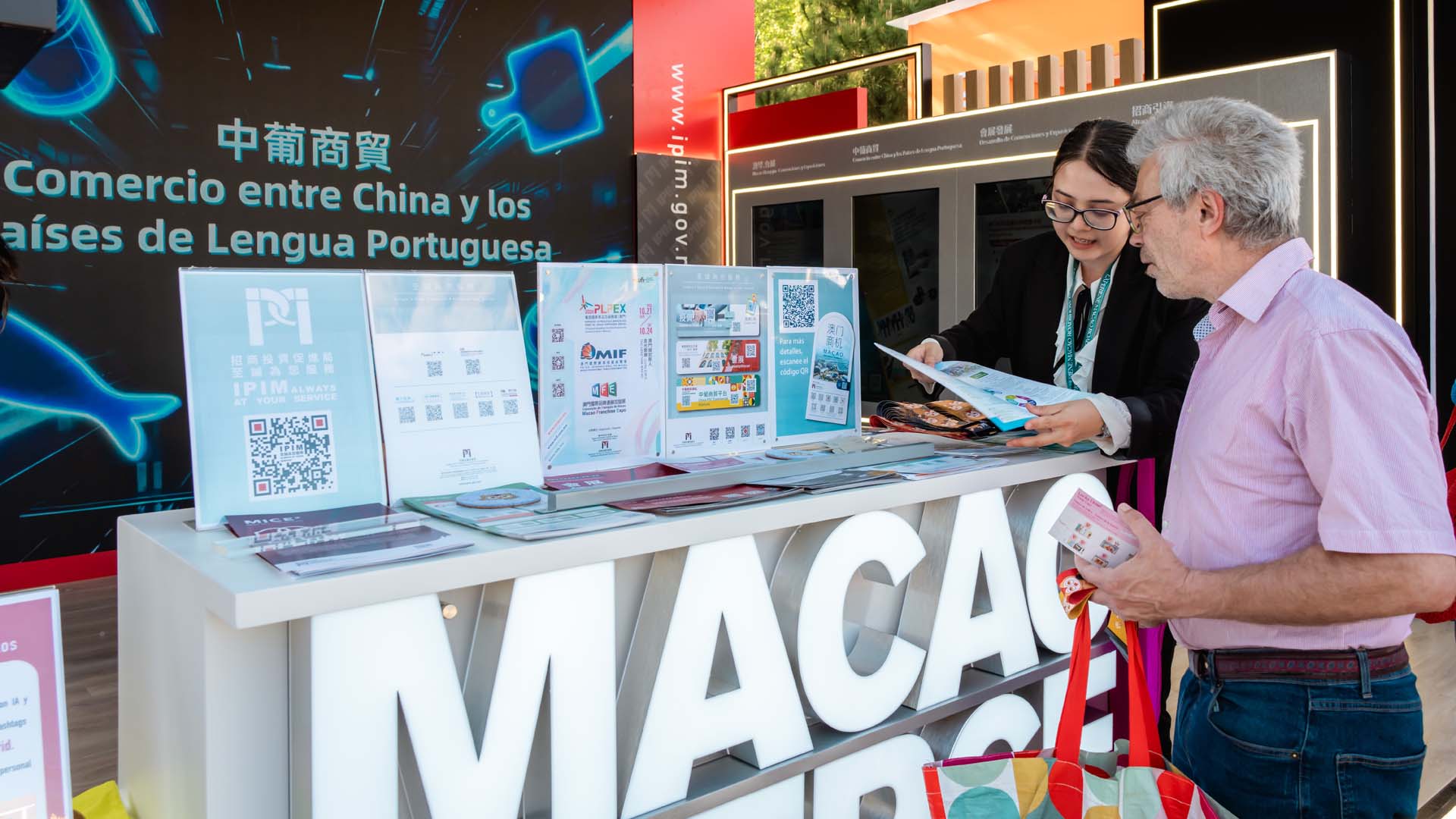
For more than two decades, Macao has served as the country’s platform to the Portuguese-speaking world, drawing on its centuries of cultural exchange, bilingual legal system and long-standing commercial relationships.
Since the establishment of the Forum for Economic and Trade Co-operation between China and Portuguese-speaking Countries (Macao) in 2003, trade between China and Portuguese-speaking countries has grown from around US$11 billion to US$225.8 billion in 2025, according to the Commerce and Investment Promotion Institute (IPIM).
The Macao Special Administrative Region (MSAR) Government is now preparing to take that role a step further, as it works to extend its reach to Spain and, progressively, to the wider Spanish-speaking world. For IPIM, the strategy represents a natural evolution rather than a fundamental change of direction.
“Over more than two decades, Macao has developed an irreplaceable role as a bridge between China and Portuguese-speaking countries,” IPIM noted in a written reply to Macao Magazine. “Building on this success, Macao is now extending the platform’s reach to Spain and Spanish-speaking countries in Latin America,” aiming, “through a dual Portuguese- and Spanish-speaking strategy, to evolve from being a ‘precise connector’ between China and Portuguese-speaking countries into a broader gateway linking China with the wider Latin-language world,” IPIM added.
The initiative is also closely aligned with China’s national development priorities.
“President Xi Jinping has described the country’s 15th Five-Year Plan not only as a blueprint for the country’s development, but also as a ‘list of opportunities’ for the rest of the world,” IPIM observed. “Macao is actively embracing these opportunities and strengthening its role as an important gateway for China’s opening up in the new era.”
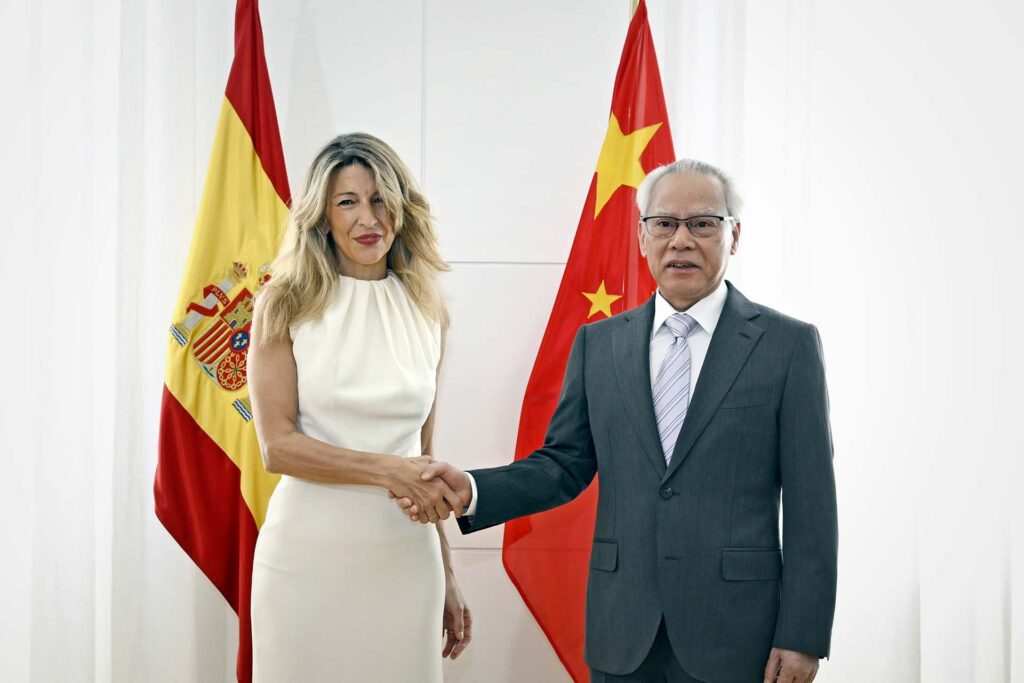
The plan gathered considerable momentum earlier this year during Chief Executive Sam Hou Fai’s first official overseas visit since taking office. Leading a delegation of around 120 representatives from Macao, Hengqin and the Chinese mainland to Portugal and Spain, Mr Sam used the trip to underline the Government’s intention to expand Macao’s international platform beyond its focus on Portuguese-speaking countries.
Spain, a deliberate choice
As the European Union’s fourth-largest economy, Spain combines a modern industrial base with deep historical, cultural and commercial links to Latin America. Geographically neighbouring Portugal and sharing many legal and institutional characteristics with Portuguese-speaking countries, Spain provides what IPIM considers the ideal “starting point” for extending Macao’s platform into the Spanish-speaking world.
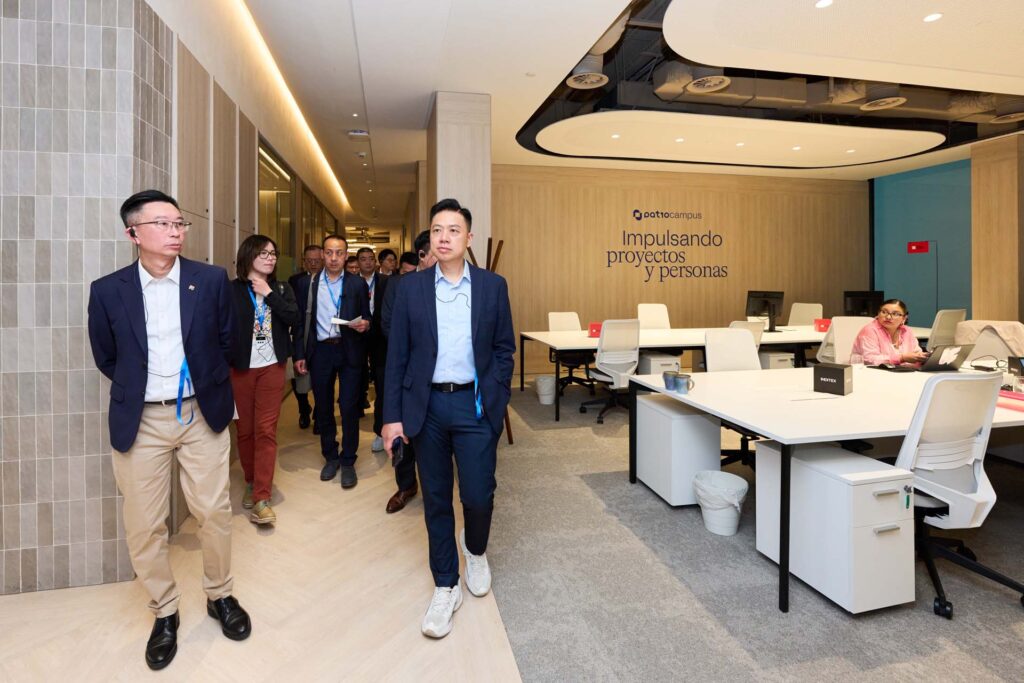
The April visit produced tangible outcomes. During six days of meetings, the delegation participated in more than 220 business-matching sessions, resulting in the signing of 109 cooperation agreements. Of these, 61 were concluded in Portugal and 48 in Spain, covering sectors ranging from technology and healthcare to tourism, professional services and cross-border investment. At the same time, IPIM signed strategic cooperation agreements with the Chinese Chamber of Commerce in Spain and the Federation of Chinese Business Associations in Spain, while establishing official working relationships with ICEX – Spain Trade and Investment and the investment promotion authorities of the Community of Madrid.
Those agreements are intended to create the foundations needed for sustained commercial cooperation. “The initiative will gradually expand to Spanish-speaking countries across Latin America,” representing a market of about 500 million people, IPIM stated. “Rich in natural resources and highly complementary to China’s economy, these markets offer significant opportunities for Chinese mainland companies expanding overseas.”
According to the institute, Macao’s role will be to help facilitate those connections while providing businesses with practical support, professional services and access to the Guangdong-Hong Kong-Macao Greater Bay Area.
For Rui Pedro Cunha, president of the General Assembly Board of the Macau Portuguese and Spanish-Speaking Countries Entrepreneurs Association, the plan represents the logical next chapter in a story that Macao has been writing for more than two decades.
“Macao already has a solid foundation as the platform between China and Portuguese-speaking countries,” he noted in commentary to Macao Magazine. “What the association intends to do now is to extend this experience into a broader China-Portuguese-Spanish-speaking countries cooperation framework,” Mr Cunha explained.
In the initial phase, he said, Spain will be one of the association’s “key priorities”.
“Spain is an important European economy, and it can also serve as a gateway for Macao and mainland enterprises to better understand and connect with Spanish-speaking markets,” he noted. “At the same time, the association will not treat the Spanish-speaking world as one single market. Different markets have different strengths. Spain has clear advantages in tourism, MICE [Meetings, Incentives, Conventions and Exhibitions], professional services, green finance, renewable energy, high-end manufacturing and technology.”
Latin American markets meanwhile “offer major opportunities in agriculture, food and beverage, energy, infrastructure, e-commerce, digital economy, healthcare and consumer markets,” he explained.
Mr Cunha added: “The approach will be to use Spain as an important starting point and bridge, while gradually learning and expanding into Latin American markets according to industry demand, our member’s needs and available cooperation partners.”
Turning strategy into business
Macao’s success in expanding beyond the Portuguese-speaking world will depend on whether companies see the city as a useful place to invest, find partners and develop projects.
IPIM’s role has evolved significantly in recent years, mirroring the MSAR Government’s broader economic strategy. Under the “1+4” economic diversification strategy, greater emphasis is placed on attracting industries that complement Macao’s long-term development and strengthen its role within the Greater Bay Area.
The trade body said it is “shifting” its promotional efforts “from expanding investment scale to improving quality and optimising industrial structure”. Rather than pursuing investment indiscriminately, IPIM is focusing on enterprises capable of contributing to Macao’s emerging industries while taking advantage of the city’s unique international positioning.
Three sectors have become the immediate priorities. The first is high technology, “with emphasis on biopharmaceuticals, digital technology, integrated circuits and aerospace technology,” the institute noted.
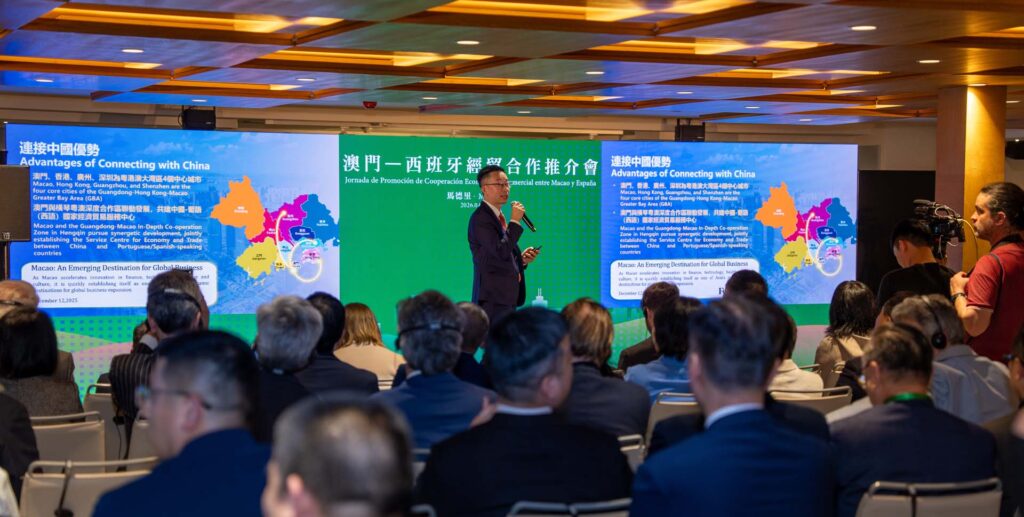
Working alongside the Macao science and technology research industrial park and the Guangdong-Macao In-Depth Cooperation Zone in Hengqin, the MSAR Government aims to create an innovation chain in which “research and development is carried out in Macao, and the products are commercialised and industrialised in Hengqin”.
The second priority is modern financial services. Macao has long aspired to strengthen its financial sector, and officials increasingly see opportunities to develop specialist services connecting China with Portuguese- and Spanish-speaking markets. Wealth management, private equity and financial technology form part of that strategy.
According to IPIM, market interest is already emerging. By May this year, 56 financial institutions had entered discussions about establishing operations in Macao.
The big health industry forms the third pillar, with Macao striving to attract leading companies involved in Traditional Chinese Medicine (TCM), biopharmaceuticals and healthcare services. Officials believe the city’s established relationships with Portuguese-speaking countries provide an effective channel for promoting the internationalisation of TCM while encouraging wider collaboration in medical research and pharmaceuticals.
“The objective is to build an industrial investment ecosystem capable of attracting high value-added companies that closely align with the city’s long-term industrial positioning and contribute to sustainable economic development,” IPIM observed.
Boosting support for investors
Beyond identifying priority sectors, IPIM is expanding practical support for investors. Businesses entering unfamiliar markets often face practical challenges ranging from regulatory requirements and legal procedures to finding trustworthy local partners. Thus, IPIM has spent recent years developing services intended to accompany companies throughout the investment process rather than limiting its role to initial introductions.
One of its flagship initiatives is the China-Portuguese-speaking Business Navigator, a one-stop service providing project matching, market intelligence, investment consultancy and business facilitation.
Between January and May this year, the service handled more than 200 new projects, reflecting growing demand from companies seeking to explore opportunities in both directions. Among them are the establishment of manufacturing facilities in Brazil and Angola by Chinese Fortune 500 companies, together with procurement arrangements linking one of China’s ten largest grain and edible oil enterprises with Brazilian commodity suppliers, according to data from the institute.
Trade fairs have become another important mechanism, with IPIM ensuring that companies are introduced to carefully selected partners through dedicated business meetings, allowing discussions to move quickly from initial contacts to concrete commercial negotiations.
During its flagship exhibitions in 2025, IPIM organised more than 2,200 business-matching meetings, facilitating over 240 cooperation agreements. Around 500 companies attended presentations introducing Macao’s investment environment and development opportunities, leading to 148 investment proposals from enterprises based in Portugal, Brazil, Indonesia and other international markets. Nearly one-third of those companies have since completed company registration procedures in Macao, it disclosed.
For Mr Cunha, those practical services are exactly what will determine whether Macao’s broader strategy succeeds.
The association’s positioning “is to serve as a ‘connector’ for enterprises,” he added. “This means the association is not only creating a general exchange platform, but also helping enterprises identify real partners, understand market entry requirements, access professional services, participate in MICE activities, and move from initial contact to concrete cooperation.”
Through this integrated network, Mr Cunha said the organisation hopes “to provide one-stop support for overseas enterprises entering Macao, Hengqin and the Greater Bay Area, while also helping Macao and mainland enterprises expand into Portuguese- and Spanish-speaking markets”.
This, he noted, “is also closely aligned with Macao’s latest direction of strengthening its platform function,” including the development of the Service Centre for Economy and Trade between China and Portuguese/Spanish-speaking Countries (CECPS) in Hengqin.
From policy to partnerships
Rather than creating new institutions from scratch, IPIM is increasingly using the city’s established conventions and exhibitions to introduce overseas companies to Chinese mainland partners, showcase emerging industries and facilitate investment. That experience now provides an important foundation for expanding cooperation with Spanish-speaking countries, the trade body noted.
The annual International Infrastructure Investment and Construction Forum & Exhibition (IIICF) is one example of how that strategy is already taking shape. Since its launch, according to IPIM, the event has welcomed almost 150 ministerial-level representatives from Spanish-speaking countries over the years and has “successfully hosted 12 editions of the China–Latin America Infrastructure Cooperation Forum”. This year’s edition, which concluded in June, marked another important milestone: for the first time, ministers and senior representatives from Latin America were invited to visit the Cooperation Zone in Hengqin, “laying the groundwork for closer collaboration between Macao and Spanish-speaking Latin America,” IPIM stressed.
That approach will also be evident at this year’s Macao International Trade and Investment Fair (MIF), scheduled for October. For the first time, the exhibition will include a dedicated Spanish-speaking Countries Pavilion. Running alongside MIF, the Products and Services Exhibition of Portuguese-speaking Countries (Macao) is already recruiting exhibitors internationally and “is expected to attract companies from both Portuguese- and Spanish-speaking markets”.
The same thinking underpins the institute’s overseas trade missions. In July, IPIM took part in a business delegation organised by the Shunde Import and Export Chamber of Commerce to Brazil and Argentina, further strengthening multilateral trade and investment networks.
Earlier this year, another delegation of more than 40 companies travelled to Brazil, facilitating several cooperation agreements in the biopharmaceutical sector and “helping participating enterprises establish access to Latin American markets,” IPIM said.
For Mr Cunha, this gradual approach is essential. The city’s experience with Portuguese-speaking countries provides an important advantage in that respect.
Unlike many jurisdictions seeking to establish new international partnerships, Macao already understands the importance of acting as a trusted intermediary rather than simply promoting commercial transactions.
“Following the Chief Executive’s visit to Spain [in April], Macao’s cooperation with Spain has entered a new stage,” he said, noting that members of the association participated in the visit and established closer contacts with Spanish business organisations.
Those relationships are already being reinforced through cooperation with institutions such as the Spanish Chamber of Commerce in South China and the Macau European Chamber of Commerce, while the association has also established links with several Spanish organisations that it hopes will become long-term partners.
A gateway to larger markets
Officials also emphasise that Macao’s international appeal cannot be understood in isolation. Its greatest strength lies in the way it connects with neighbouring Hengqin and the Greater Bay Area. According to IPIM, this integrated approach “offers companies from Spanish-speaking countries a unique gateway into the Chinese mainland market”.
“Companies establishing operations in Macao and Hengqin can simultaneously benefit from Macao’s free port status, simple and competitive tax system, and free movement of capital, while also enjoying easier access to the mainland market and Hengqin’s industrial support ecosystem,” the institute stated.
The Greater Bay Area is home to more than 86 million consumers and ranks among China’s most economically advanced regions. For overseas businesses, “the Greater Bay Area’s highly integrated industrial and supply chains also provide comprehensive support in manufacturing, research and development, logistics and related services”.
Ultimately, however, it is the companies that decide whether opportunities become commercial realities, Mr Cunha noted. “Hengqin and the Greater Bay Area are essential to this process. Macao has the platform, cultural, legal, financial and international networking advantages, while Hengqin provides industrial space, policy support and project landing capacity,” he said.
“The association will continue to promote the ‘Macao + Hengqin + Greater Bay Area’ model. This includes supporting one-stop services for overseas enterprises coming in, helping local and mainland enterprises go global together, and linking enterprises with professional services in finance, law, tax, compliance, MICE, logistics and market development,” Mr Cunha added.
The organisation also hopes to “strengthen cooperation” with the CECPS in Hengqin, so that “policy resources, business resources, academic resources and enterprise needs can be better connected”.
Looking ahead over the next five years, Mr Cunha expects the “greatest opportunities” to emerge in sectors where the Chinese mainland, Macao and Portuguese- and Spanish-speaking countries possess complementary strengths. These include “trade and investment, MICE, cultural tourism, agricultural products and food trade, cross-border e-commerce, green finance, renewable energy, healthcare, biomedicine, technology innovation, professional services and education,” he added.
“The association believes there is strong potential in using Macao as a platform for Portuguese- and Spanish-speaking products to enter the Chinese mainland market, including food, wine, agricultural products, cultural products and lifestyle brands,” Mr Cunha noted.
Chinese mainland enterprises in the fields of technology, healthcare, renewable energy, infrastructure, e-commerce and professional services “can use Macao as a springboard to understand and enter Portuguese- and Spanish-speaking markets,” he concluded.
| Building a practical link |
|---|
| Rui Pedro Cunha, president of the General Assembly Board of the Macau Portuguese and Spanish-Speaking Countries Entrepreneurs Association says expanding Macao’s platform role beyond Portuguese-speaking countries is a natural evolution, but one that requires a pragmatic and long-term approach. Mr Cunha identifies the diversity of Spanish-speaking markets as the first major challenge. “Spanish-speaking countries cover very different legal systems, tax rules, business cultures, levels of market development and regulatory environments. For enterprises, this means that entering Spanish-speaking markets requires careful preparation, local knowledge and reliable partners,” he stated. “We need to gradually build more direct, regular and trusted channels with chambers of commerce, enterprises, government-related institutions, professional bodies and overseas Chinese business communities in Spanish-speaking markets,” he noted. Mr Cunha also believes interest alone is not enough. Many companies are attracted by the opportunities these markets offer but lack practical knowledge on market entry, risk assessment and partner selection. The association therefore intends to focus on cross-border training, legal and tax support, business matching, investment-risk awareness and market-entry guidance. “Macao’s advantage is that it already has experience in reducing trust costs between China and Portuguese-speaking countries,” he noted. To translate that vision into tangible opportunities, the association is pursuing several initiatives. It plans to strengthen partnerships with overseas business organisations. Planned activities include policy briefings, market-entry seminars, business-matching sessions, company visits, trade missions and investment promotion events. The association has already supported initiatives in Hengqin and Macao focused on Portuguese- and Spanish-speaking markets. Mr Cunha said the organisation also aims to offer a one-stop support service for Portuguese- and Spanish-speaking businesses interested in Macao, Hengqin and the Guangdong-Hong Kong-Macao Greater Bay Area, providing guidance on regulations, business registration, financing and local partnerships. For Chinese enterprises expanding overseas, he advocates a “going global together” model, allowing companies to share costs, exchange information, reduce risks and strengthen their bargaining power. According to Mr Cunha, the association also plans to launch international branding initiatives, including the “Portuguese- and Spanish-speaking Countries Outstanding Entrepreneurs Awards” due to be held in October 2026. https://macaomagazine.net/going-global-with-the-spanish-speaking-world/ |
jul26
Questionado sobre a possibilidade de alargar o âmbito do Fórum aos países de língua espanhola, Ji esclareceu que “até ao momento, o Secretariado Permanente não recebeu este tipo de orientações ou propostas formais, quer da parte do Governo central, quer da parte do Governo da RAEM”.
Ainda assim, garantiu que o organismo está “disposto a colaborar activamente com os trabalhos relevantes do Governo da RAEM”, desde que se “mantenham em consonância com o âmbito do Fórum e com as orientações do Governo Central da China”.
https://hojemacau.com.mo/2026/07/20/cplp-ji-xianzheng-defende-papel-de-forum-de-macau/
jul26
Macau has ‘potential’ but remains ‘largely unknown’ in Hispanic countries as bridge to China – analysts
jun26
Strategic pact paves way for Macau-Latin America cargo air route
By LUSA
Chinese and Latin American enterprises have signed strategic agreements to launch a direct cargo air route from Macau to Latin America alongside a new Sino-Brazilian aviation innovation platform
The initiatives were formalised at a ceremony organised by the Hengqin-based Economic and Trade Service Centre for China and Portuguese/Spanish-Speaking Countries, involving 16 companies across tech and finance
Chinese and Latin American companies have signed agreements to develop a Sino-Brazilian aviation innovation platform and a direct cargo air link between Macau and Latin America.
According to a statement released on Monday, the Economic and Trade Service Centre for China and Portuguese/Spanish-Speaking Countries (CECPS) in Hengqin organised a ceremony where strategic internationalisation agreements were signed with 16 companies in the technological innovation and finance sectors.
The agreements involved companies such as Huawei Macao, Mercado Libre, JD.com, Kuaishou Technology, Bank of China, and China Southern Airlines Technology.
Shenzhen firm to back cargo route
One of the agreements involves Chinese firm WGL Group, which according to the CECPS has been providing investment and financing support, helping to drive the launch of a direct cargo air route from Macau to Latin America.
WGL Group is a logistics and international cross-border e-commerce supply chain solutions group based in Shenzhen, another city in southern China.
The company specialises in transporting goods from China directly to global markets, focusing primarily on Latin America and the United States. It currently operates five round-trip flights per week on the China–Mexico route.
Hengqin cargo terminal on track
There is currently a cargo terminal project running from Hengqin to Macau International Airport, with completion scheduled for the end of 2026 and operations expected to begin by mid-2027.
The terminal, featuring 66,700 square metres of logistics space and an investment of around 700 million yuan (90.3 million euros), is funded by Macau Airport and China COSCO Shipping Logistics Supply Chain.
According to the CECPS, the signed contracts aim to support companies expanding into Latin American markets and Portuguese-speaking countries through credit services, risk assessment, cross-border financing, outbound direct investment registration, and the promotion of advanced technologies.
Tech partnerships expand
In the same statement, Ng In Cheong, vice-president of the CECPS, highlighted that beyond the 16 entities now involved, the centre has already established partnerships with around 200 companies and service providers, primarily in the field of artificial intelligence.

“The complementarity between China’s leading position and the technological gaps in Portuguese and Spanish-speaking countries opens up broad scope for cooperation,” he said.
The centre was launched in April 2025 by the MSAR Government and the Executive Committee of the Guangdong–Macau Deep Cooperation Zone, aiming to create an integrated platform of internationalisation services linking China with Portuguese and Spanish-speaking nations.
Macau’s existing integration and cooperation plans with Guangdong province and the Hengqin special economic zone also offer a pathway for companies from Spanish-speaking countries to enter China.
Broad trade scope
The centre’s priority fields cover the digital economy, healthcare, advanced manufacturing, raw materials trade, cross-border e-commerce, and cultural and sports industries.
Among the practical outcomes, the centre highlighted risk reduction in the export of flight simulation equipment, the installation of digital delivery centres in Spain and Brazil by the company Beyondsoft, and support for firms expanding into foreign markets through integrated compliance, logistics, and financing solutions.
The CECPS also noted its focus on business missions to Brazil, such as the one conducted in June during Web Summit Rio, which brought together more than 200 Brazilian companies.
As of March this year, the Hengqin Cooperation Zone had 27 scientific and technological innovation platforms, 238 nationally recognised high-tech enterprises, and 18 registered unicorns.
The CECPS also plans to develop an Embodied Artificial Intelligence Innovation Centre, the first phase of which will occupy 3,400 square metres in Hengqin, with an annual data production capacity exceeding 10 PB (petabytes).
https://macaubusiness.com/strategic-pact-paves-way-for-macau-latin-america-cargo-air-route/
jun26
Gov’t to expand trade platform to Spanish-speaking nations
mai26
O antigo embaixador e ministro António Martins da Cruz considera que a “Espanha está a condicionar, de certo modo, alguma exclusividade que Portugal desfrutava em Macau”, alertando para a necessidade de as autoridades portuguesas terem mais presença na RAEM
Foi na palestra “Oriente e Ocidente – o Mundo em 2026”, que decorreu na sexta-feira em Lisboa, que o antigo embaixador e ministro dos Negócios Estrangeiros António Martins da Cruz deixou um alerta para o crescente peso que a Espanha está a ganhar no relacionamento com a China e, consequentemente, com Macau.
“Em Macau e na ilha de Hengqin todas as associações e institutos que conheço tinham como objecto o comércio e relações económicas entre a China e países de língua portuguesa, e agora em todos foi acrescentado Espanha, ou países de língua espanhola”, referiu no evento promovido pela Associação dos Novos Amigos da Rota da Seda (ANRS).
“Espanha está a condicionar, de certo modo, alguma exclusividade de que Portugal desfrutava em Macau”, acrescentou António Martins da Cruz, falando da mais recente visita oficial de Sam Hou Fai, Chefe do Executivo da RAEM, a Portugal e Espanha.
“Desde Dezembro de 1999 que há uma tradição do Chefe do Executivo de Macau vir a Lisboa na primeira viagem que faz, mas, pela primeira vez, depois de Lisboa, foi a Madrid, onde até ficou mais umas horas do que tinha estado em Lisboa.”
https://hojemacau.com.mo/2026/05/18/comercio-martins-da-cruz-acha-que-espanha-condiciona-exclusividade-de-portugal/


Comments
Post a Comment