Lei do ouro
OPINION – New pattern of cross-boundary gold and silver smuggling in Hong Kong and Macau
Criminal shifts toward gold and silver pellets are fuelled by mainland price surges and tax evasion in Japan
Syndicates use “ant” groups and hidden compartments, but regional customs are successfully intercepting shipments using X-ray technology and shared intelligence

Recent developments of cross-boundary crime in Hong Kong, Macau and the Chinese Mainland have shown that criminal activities have shifted to the smuggling of gold and silver pellets, apart from the traditional criminal acts of food smuggling, drug trafficking, cross-border prostitution, and illegal labourers. The forthcoming World Cup that will be held in the US, Mexico and Canada will likely stimulate a new pattern of cross-boundary crime, namely cross-boundary illegal football betting.
As early as October 2023, the Shenzhen customs arrested a Hong Kong driver who wrapped ten kilograms of gold bars around his body and who attempted to smuggle them from Hong Kong to the Chinese Mainland. It was reported that, due to the rise in gold price in the mainland, a person who smuggled gold from Hong Kong to the Chinese Mainland could at least earn several thousand Renminbi. According to the mainland law, a person who crosses the border can only have fifty grams of gold for his or her personal usage.
In January 2024, the Hong Kong customs arrested a Macau person who crossed the Hong Kong-Macau-Zhuhai bridge from Hong Kong to Macau, and who carried twenty kilograms of gold that worth HK$10 million (TDM, January 9, 2024). He was a driver and the gold was deposited in a hidden compartment in his seven-person vehicle. The Hong Kong customs discovered the gold by using X-ray to scan the bottom part of the vehicle.
This was the first case of gold smuggling within three years, according to the Hong Kong customs (HK01.com, January 9, 2024).
Profitable routes and methods for precious metal smuggling
The driver wanted to smuggle the gold to the mainland through Macau. In early 2024, one kilogram of gold in Shanghai was worth RMB$530,000 while the same amount of gold in Hong Kong amounted to HK$500,000. Hence, gold smuggling was highly profitable to smugglers and organized crime syndicates.In January 2024, the Hong Kong customs arrested a Macau person who crossed the Hong Kong-Macau-Zhuhai bridge from Hong Kong to Macau, and who carried twenty kilograms of gold that worth HK$10 million.
He was a driver and the gold was deposited in a hidden compartment in his seven-person vehicle. The Hong Kong customs discovered the gold by using X-ray to scan the bottom part of the vehicle. This was the first case of gold smuggling within three years, according to the Hong Kong customs.
China and Japan are common destinations of the smuggling of gold and silver, reflecting not only the supply-and-demand situation but also the determination of the smuggling syndicates to reap quick profits at the risks of their smugglers being caught
In March 2025, the Hong Kong customs detained sixty-four kilograms of gold bars that worth HK$46 million in a package claiming to have toys, light bulbs and hats with Japan as the final destination (I-Cable News, March 11, 2025). The sender belonged to a logistic company in the Chinese Mainland. Although nobody was arrested, the criminal act illustrated an attempt at cross-boundary smuggling of gold bars.
In June 2025, the smuggling of two kilograms of gold bars worth HK$6.2 million was confiscated at the international airport in Vietnam where a Taiwan person was arrested (Taiwan News, June 26, 2025). In this case, the gold bars were hidden in a camera carried by the Taiwan person. It was reported that some Taiwanese smuggled gold bars also to Cambodia and Hong Kong. Apart from Japan where the buying and selling of gold need to pay tax, other countries that have levied tax on gold transactions include China, Japan, South Korea and Vietnam. Given that many Taiwan people travel to Vietnam to conduct business, the smuggling of gold from Taiwan to Vietnam was not surprising.
In August 2025, the Hong Kong customs detained a batch of iron boxes of plastic flowers in which 26.2 kilograms of gold were hidden with a market price of HK$22 million. The destination was Japan.
Escalating silver smuggling and the ant strategy
Although nobody was arrested, this case highlighted a “new” route of smuggling from Hong Kong to Japan. However, the smuggling of gold from Hong Kong to Japan was arguably not “new,” because it had already occurred in 2017 – a period before the emergence of Covid-19 as some Hong Kong air passengers were already found by the Japanese customs as “mules” bringing golden pellets from Hong Kong to Japan, where eight percent of the consumption tax was levied on gold transactions (Oriental Daily, August 4, 2017).

In November 2025, the Hong Kong customs found that 140 kilograms of gold was smuggled from an air cargo from Hong Kong to Japan through boxes composed of tea porcelain (HK01.com, November 5, 2025). The cargo was checked successfully after the customs gained intelligence that it might be used for smuggling purposes. In another case that occurred in October, the Hong Kong customs also cracked down on eighty kilograms of gold worth HK$80 million and the gold was hidden in an air cargo that claimed to have clothing materials.
In February 2026, the Gongbei customs arrested a cross-boundary driver who attempted to smuggle 150 kilograms of silver from Hong Kong-Macau-Zhuhai bridge into the mainland (Sing Tao Daily, February 21, 2026). The smuggled silver amounted to HK$3.1 million and the driver admitted that he wanted to reap quick profits through gold-smuggling activities.
In March 2026, four Taiwanese air passengers were arrested in Vietnam’s Noi Bai airport for attempting to smuggle 12.3 kilograms of gold bars that were hidden in their underwear (8world.com, March 10, 2026). They also carried golden wrists without reporting to the Vietnam customs.
Escalating silver smuggling and the ant strategy
The Vietnamese customs have begun to check more air passengers who are flying from Taiwan, Hong Kong and South Korea for suspected gold smuggling. n early March 2026, the Hong Kong customs cracked down on two cases of smuggling, including 168 kilograms of gold pellets and 285 kilograms of silver pellets. In total, the gold and silver pellets were worth HK230million. If they were smuggled to Japan successfully,HK23 million of tax could have been evaded.
The gold-smuggling cases have reemerged gradually after the end of Covid-19 and quickly proliferated since the end of 2025. The turbulent situation of international politics has stimulated the smuggling of gold and silver in the Greater China region, including the Chinese Mainland, Hong Kong, Macau and even Taiwan
Given the fact that the gold price in the market increased significantly in late 2025, criminal elements wrapped the golden pellets inside electric appliances. The sender’s address was located in Hong Kong but there was actually no office, while the receivers were two companies in Japan. As with the gold market, the silver market in late 2025 witnessed a drastic increase in silver price. Moreover, silver can be used in the manufacturing of jewellery and industrial products. According to the Import and Export Ordinance, those people who commit a criminal offence of smuggling can be fined for HK$2 million with seven years of imprisonment. As such, the customs authorities appealed to the people of Hong Kong not to engage in smuggling activities.
In mid-March 2026, the Macau customs arrested forty-two people, including twenty-five Macau people, twelve mainlanders and five Hong Kong persons, for smuggling 138 kilograms of silver pellets worth MOP$3 million. The arrested persons ranged from 16 to 67 years old and all of them hid the silver pellets in their bodies, clothes and self-belongings. It looked as if the smuggling syndicate adopted the strategy of mobilising a large group of people as “ants” smuggling a bit of silver pellets incessantly from Macau to the Chinese Mainland.
Heightened customs enforcement across the greater China region
But all these attempts became abortive once they were asked to go through X-ray checkpoints at the Macau border.
On March 28, 2026, the Hong Kong customs seized 145 kilograms of gold bars worth HK$110 million in a Japan-bound air cargo with plastic suitcases (Hong Kong Free Press, March 28, 2025). The customs officers found abnormal signs in X-ray images of the suspected cargo, and they inspected and found the shipment was much heavier than what was declared.
By the end of March 2026, the Macau customs arrested eleven Macau persons and mainlanders who ranged from 16 to 76 years old, and who attempted to smuggle forty-eight kilograms of silver pellets worth MOP$850,000 (TDM, March 30, 2026). The young students who were arrested were transferred to the Education Bureau for follow-up educative action.
In mid-April 2026, Shenzhen customs in the airport detained eleven suspects for smuggling 230 kilograms of gold that amounted to RMB$78 million (HK01.com, April 14, 2026). This case was similar to an earlier smuggling case in which three Shenzhen residents were arrested in the Shenzhen airport for attempting to smuggle 2.8 kilograms of golden necklace and rings. It was revealed that several jewelry shops contacted a logistic company in Guangzhou to organize the three smugglers to bring the golden necklace and rings to an overseas destination where one of the smugglers opened a jewelry shop. The golden necklace and rings were designed skillfully in the Chinese Mainland and so they are in high demand in some overseas countries where the Chinese jewelry shops can sell them and make lucrative profits.
Global price surges and the future of regional cooperation
At the same time around mid-April 2026, a Hong Kong motorcyclist was arrested in Shenzhen for smuggling eighteen kilograms of silver pellets worth RMB370,000. The silver pellets were hidden in a battery box of his motorcycle (Sing Tao Daily, April 18, 2026). The nervousness of the motorcyclist alarmed the Shenzhen custom officers, who succeeded in cracking down his smuggling attempt.
In May 2026, the Tokyo Narita Airport discovered thirty-three cases of forty-six kilograms of gold smuggling – an amount that already reached seventy-five percent of the total amount of gold smuggling in 2025. It was reported that forty-five kilograms of gold was worth HK$60 million – a high amount with lucrative profits to the smuggling syndicates. The Japanese customs also found that, in the cases of 2025, gold powders were stored inside the smugglers’ bodies through the use of condoms (HK01.com, May 7, 2026). Due to the US-Israeli war with Iran, there was an upsurge in gold prices, leading to the high frequency of gold-smuggling cases from places like Hong Kong and Taiwan to Japan.
In conclusion, the gold-smuggling cases have reemerged gradually after the end of Covid-19 and quickly proliferated since the end of 2025. The turbulent situation of international politics has stimulated the smuggling of gold and silver in the Greater China region, including the Chinese Mainland, Hong Kong, Macau and even Taiwan.
Interestingly, China and Japan are common destinations of the smuggling of gold and silver, reflecting not only the supply-and-demand situation but also the determination of the smuggling syndicates to reap quick profits at the risks of their smugglers being caught. Fortunately, the customs authorities in the Greater China region, and in other places like Japan and Vietnam, have been cracking down hard on gold- and silver-smuggling cases intensively and successfully. As such, the efforts of law-enforcement agencies and their cooperation as well as intelligence-sharing are going to be a crucial factor curbing the growth of gold and silver smuggling in the coming years.
https://macaubusiness.com/opinion-new-pattern-of-cross-boundary-gold-and-silver-smuggling-in-hong-kong-and-macau/
Jewelry Store Cluster Forms and Characteristics of Urban Commercial Spaces in Macau
Macau’s gold sellers now have until 1 January next year to prepare for new rules governing gold and platinum sales.
These new rules were approved by legislators on Thursday after their second reading, ending a 20‑year‑old set of regulations designed to protect consumers.
The original rules were written to target gold items only.
The new move will add those made of platinum and gold‑plated and gilded items to the scope of protection.
One of the highlights of the bill passed is that sold gold must now have a fineness of no less than 999 parts per thousand, equivalent to 99.9 percent purity.
Platinum designated as pure platinum must meet a minimum of 99.0 percent purity.
Gold purchases remain a deeply rooted tradition in Chinese culture, particularly during the Lunar New Year or for wedding celebrations.
The gold price, historically a safe haven in times of uncertainty, was trading on Thursday at around US$4,700 (MOP37,939) per ounce.
In February this year, Grand Emperor Hotel confirmed that it had sold the gold bricks long lying across its lobby floor, pocketing nearly US$13 million from the sale.
The hotel, which opened its doors in 2006, is known for opulent decorations including a gold‑paved section of its entranceway.
5/11/25
SAR sets new standards for precious metal purity and hallmarking
By LUSA
Macau has updated its law on the purity of gold and platinum sold in the city, repealing a 20‑year‑old regulation to better protect consumers and modernise the sector in line with competing markets.
The rule, presented to the Legislative Assembly by the Secretary for Economy and Finance, Tai Kin Ip, stipulates that the fineness of solid gold must be no less than 999 parts per 1,000 (999‰), while platinum must meet a minimum of 990‰. The 999‰ standard is the most common for investment products, including bars and coins.
Addressing lawmakers, Mr Tai said the revision aims to enhance the competitiveness of the jewellery sector in Macau and strengthen consumer protection. “Gold jewellery items are among the most sought‑after valuables by residents and tourists,” he noted, describing the change as necessary to maintain product quality in a “high‑quality tourism and shopping city”.
He added that the regulation draws on legislation from the Hong Kong SAR and the legal systems of mainland China, Taiwan and Portugal. According to the Secretary, the update also aligns with market demand and is intended to promote the healthy development of the sector, reinforcing Macau’s positioning as a world centre of tourism and leisure.
Gold purchases remain a deeply rooted tradition in Chinese culture, particularly during Lunar New Year and for wedding celebrations. The gold price — historically a safe‑haven in times of uncertainty — was rising on Monday, with the ounce trading at USD 4,020.03, up from USD 4,002.92 on Friday, though still below the all‑time high of USD 4,347.86 recorded on 20 October.
https://www.macaubusiness.com/sar-sets-new-standards-for-precious-metal-purity-and-hallmarking/
out25
Os preços do ouro dispararam para máximos históricos em outubro, impulsionados por uma confluência de tensões geopolíticas, incerteza económica e expectativas de mais descidas nas taxas de juro por parte da Reserva Federal dos EUA.
As transações de “ouro à vista” – compra e venda de ouro para entrega imediata, e não a prazo ou por contrato futuro – atingiram um pico de preços sem precedentes de 4.379 dólares americanos (cerca de 35.848 patacas) por onça, marcando um aumento de mais de 60% desde o início do ano.
Para Lei Cheok Kuan, vice-presidente da Associação das Ourivesarias de Macau, a tendência de comprar ouro durante períodos de subida de preços começou a acentuar-se a partir da administração Trump nos Estados Unidos. “Foi durante a governação de Trump que o ouro voltou a afirmar-se como refúgio financeiro. Ele criou instabilidade global e as pessoas deixaram de saber onde investir com segurança”, observa.
Com a confiança no dólar e no euro abalada, o ouro recuperou o seu papel de ativo internacional de confiança. “Ao contrário do dólar, o ouro não pertence a nenhum país nem está sob o controlo de um governo. Tem circulação e reconhecimento global. É visto como um ativo que preserva valor e representa segurança e até dignidade financeira”, disse Lei.
Ivan U Hou Leong, fundador da empresa fornecedora de ouro Asia Pacific Island Resources, acrescenta que, no futuro, Macau poderá explorar novas vias de integração entre o comércio de ouro e os serviços financeiros. “Acredito que Macau continuará a centrar-se no seu setor de lazer, mas o ouro poderá desenvolver-se se for integrado com as finanças modernas”, afirma ao PLATAFORMA. “Dependerá de profissionais do setor que saibam tirar partido das vantagens do porto franco de Macau e da sua rede com os países lusófonos”, diz.
O Conselho Executivo apresentou recentemente uma proposta de lei para a comercialização do ouro e da platina indicando que a legislação atual “implementada há mais de 20 anos, já não consegue satisfazer as expectativas dos consumidores em relação aos tipos e à qualidade dos artigos de ourivesaria”. A proposta tem como objetivo reforçar a competitividade e a credibilidade do sector e introduz novas definições de platina, ouro chapeado e artigos revestidos a ouro.
Para Leong este regulamento será “suficiente para Macau” no que toca ao retalho, mas aponta que se o Governo quiser introduzir um mercado de ‘commodities’, o regime existente em Hong Kong poderá ser usado como referência.
Em Macau, o mercado do ouro atravessa uma transformação significativa. Se no passado a subida dos preços levava os consumidores a vender, hoje o cenário é o oposto: mais pessoas estão a comprar, atraídas pela valorização contínua e pela perceção do ouro como investimento seguro.
“Como o preço tem aumentado de forma contínua, muitos preferem acompanhar essa tendência e comprar, em vez de vender”, afirma Lei ao PLATAFORMA.
Lei explica que, embora o valor das compras tenha aumentado, o peso adquirido diminuiu devido à forte valorização do metal. “O montante gasto é maior porque o preço subiu bastante, mas a quantidade em gramas comprada é menor. Tudo se resume a uma questão de orçamento”, observa. Atualmente, um tael — equivalente a 37,5 gramas — custa cerca de 1.293,87 patacas por grama, um valor que ultrapassa o orçamento de muitos compradores.
Pressão sobre o setor
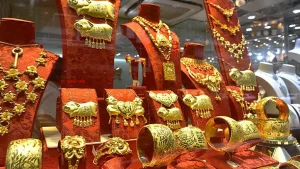
No entanto, a escalada dos preços também está a gerar desafios nas várias camadas da cadeia de comércio do ouro. Leong alerta que “o preço mais alto está a apertar as margens de cada nível de transação, tornando-as mais tensas e irregulares”.
“É uma faca de dois gumes: as pessoas continuam a entrar no mercado, mas, ao mesmo tempo, a competição em todos os níveis aumenta, e há mais atenção pública sobre o setor,” acrescenta Leong.
Ao mesmo tempo estas “subidas e descidas tão dramáticas” tornam a indústria mais imprevisível, avisa o empresário: “algumas pessoas vão à falência, e outras fazem milhões”.
Ou seja, apesar do aumento da procura, os ourives enfrentam uma pressão maior para gerir o seu negócio. “A pressão aumentou e quando precisamos de repor ‘stock’, o fluxo de caixa necessário é muito elevado”, diz Lei. “Por exemplo, desde que fundei a empresa, mantenho um stock fixo de mil taéis. Todos os meses tenho de garantir esse nível — se subir ou descer demasiado, o balanço de ativos e passivos sofre fortes oscilações”.
Refúgio seguro
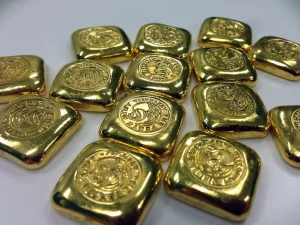
A valorização do ouro também atrai novos perfis de consumidores. “Quem comprou há alguns meses pode agora vender praticamente pelo dobro. Por isso, muitos veem o ouro como uma escolha inteligente — tem estilo, valoriza e pode ser usado no dia a dia”, acrescenta o dirigente associativo.
“Hoje, os clientes preferem peças modernas e com design, em vez do estilo tradicional. Querem algo ligado à moda, que combine com a forma de vestir”.
No entanto, mesmo em tempos de preços elevados, o hábito de comprar pequenas quantidades mantém-se. “Há quem compre apenas 1, 2 ou 5 gramas, valores pequenos, mas que fazem parte da tradição”, refere Lei. “Muitas avós e mães compram ouro para os filhos, para guardar ou usar no futuro, por exemplo, no casamento”.
“Num casamento chinês tradicional, se a noiva não usar ouro, as pessoas sentem que falta alguma coisa. É como se o casamento não estivesse completo”, conclui.
https://www.plataformamedia.com/2025/10/24/ouro-ganha-novo-folego/


Comments
Post a Comment